Table of Contents
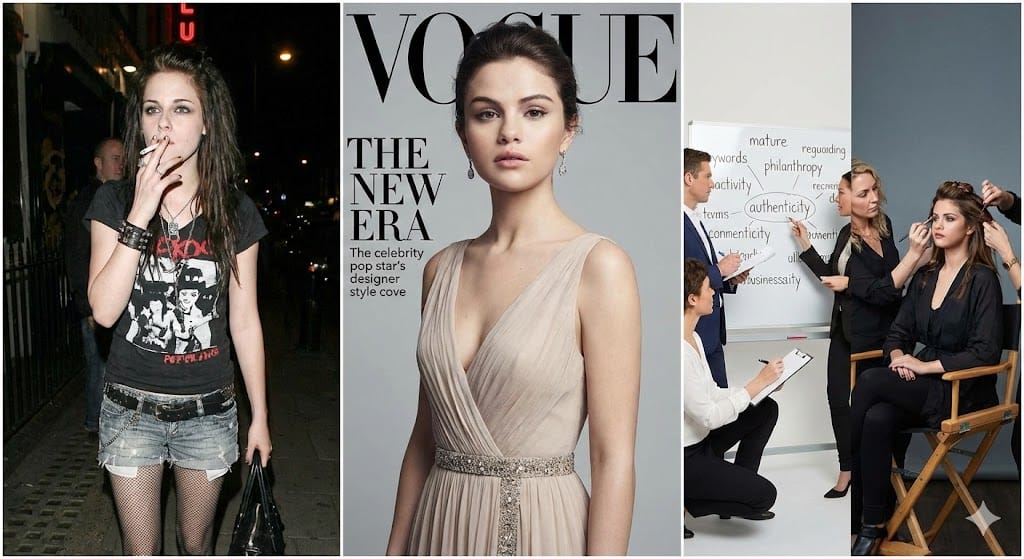
You’ve seen it happen.
An actor known for comedy becomes a serious dramatic performer.
A pop star abandons bubblegum hits for dark, artistic visuals.
A controversial celebrity disappears for a year… then returns completely different.
Fans call it a “comeback.”
Publicists call it something else:
A celebrity rebrand.
And right now, people are actively searching to understand it — which makes this a much easier SEO target than daily gossip news.
What Is a Celebrity Rebrand?
A celebrity rebrand is a deliberate shift in a public figure’s identity, aesthetic, behavior, or career direction designed to change how audiences perceive them.
It can include:
- A new fashion style
- Different music or acting roles
- Personality change in interviews
- Silence followed by a strategic return
- Social media wipe (deleted posts)
- New friend groups or public appearances
The goal is simple:
reset audience perception without starting a new career.
Why Celebrities Need Rebrands
Fame has a lifecycle. Most celebrities don’t fall off because they lack talent — they fall off because audiences mentally categorize them.
Once labeled, it becomes difficult to grow.
Examples of audience labels:
- “Disney kid”
- “Reality star”
- “Teen idol”
- “Scandal celebrity”
- “One-hit wonder”
A rebrand breaks the mental box.
How Celebrities Strategically Reinvent Their Public Image
In today’s celebrity culture, image changes are no longer random or purely stylistic — they are part of a calculated approach to maintaining relevance. A sudden haircut, a new fashion aesthetic, or a subtle shift in public behavior can signal a fresh chapter in a star’s career without the need for formal announcements. Fans notice the change, social media reacts, and the media speculates — all without the celebrity saying a word.
This process is a key career strategy for modern celebrities. By carefully controlling when and how their public image evolves, stars can align their persona with upcoming projects, brand partnerships, or media narratives. The goal is to generate interest while preserving an aura of authenticity and mystique.
Ultimately, the “rebrand era” is not about vanity or whimsy. It is a deliberate tactic within a larger system of fame management, where every choice — from wardrobe to interviews to social media presence — is planned to maximize long-term impact and career longevity.
The Three Most Common Types of Celebrity Rebrands
1. The Maturity Rebrand
Occurs when a young celebrity ages out of their original audience.
Typical strategy:
- darker clothing
- serious interviews
- artistic projects
- reduced social media silliness
This helps transition from teen audience → adult audience.
2. The Reputation Repair Rebrand
Used after controversy or overexposure.
Steps usually follow a pattern:
- Public disappearance
- Philanthropy or low-profile appearances
- Selective interviews
- A carefully chosen comeback project
The silence phase is crucial.
It lets the public emotionally reset.
3. The Artistic Reinvention Rebrand
This one is less about damage control and more about longevity.
A performer shifts style to avoid becoming predictable.
Music, film roles, fashion, and even speaking tone may change.
Why? Because predictability kills attention.
Case Study #1: Miley Cyrus — From Disney Star to Cultural Chameleon
Few celebrity rebrands have been as visible — or as debated — as Miley Cyrus’s evolution.
Phase 1: The Disney Identity
Cyrus was globally recognized as the wholesome face of a teen franchise. That image was commercially powerful but creatively restrictive. She was boxed into “family-friendly.”
Phase 2: Shock Rebrand (2013 – Bangerz Era)
Her 2013 transformation was abrupt:
- Edgier fashion
- Provocative stage performances
- Public distancing from her Disney past
This was a textbook pattern interruption strategy. She forced the audience to see her differently — immediately.
The backlash was intense, but so was the attention. Search traffic, media coverage, and streaming numbers surged.
Phase 3: Controlled Artistic Maturity
Years later, Cyrus recalibrated again. Her aesthetic became more refined, interviews more introspective, and her music leaned toward vocal strength rather than controversy.
This demonstrates an important rebrand principle:
The first reinvention grabs attention.
The second stabilizes credibility.
Her career longevity comes from not staying in any one identity too long.
The “Social Media Clean Slate” Move
One of the clearest rebrand signals is when a celebrity deletes their Instagram posts.
Fans panic — but it’s intentional.
Deleting content accomplishes three things:
- Erases old identity associations
- Signals a new era
- Triggers massive online speculation (free publicity)
The internet does the marketing for them.
Why Rebrands Work (Psychology)
Celebrity branding operates on cognitive shortcuts.
People simplify complex public figures into a single idea:
“funny actor”
“sad singer”
“troublemaker”
When the celebrity changes suddenly, the brain notices a mismatch.
That mismatch creates attention.
Psychologists call this a pattern interruption.
Attention → discussion → coverage → renewed fame.
The Role of Publicists and PR Teams
Most rebrands are not spontaneous.
They’re coordinated across:
- stylists
- photographers
- interviewers
- magazine features
- talk show bookings
- controlled paparazzi sightings
Even “candid” street photos are sometimes strategically timed.
The goal is believable authenticity — not obvious marketing.
Case Study #2: Robert Downey Jr. — The Reputation Repair Blueprint
Robert Downey Jr.’s transformation is one of the most cited reputation recovery stories in Hollywood.
Phase 1: Public Crisis
In the late 1990s and early 2000s, legal troubles and substance abuse issues dominated headlines. Studios considered him a liability.
Public perception label: “Unreliable talent.”
Phase 2: Silence + Stability
Instead of fighting media narratives publicly, Downey stepped back. He rebuilt professional credibility quietly, took smaller roles, and demonstrated reliability on set.
This is a key rebrand principle:
Rebuilding happens privately before it’s visible publicly.
Why Audiences Accept Rebrands
You might expect fans to reject a personality shift.
They usually don’t.
Because audiences actually want celebrities to evolve.
A static public figure becomes background noise.
Rebrands give fans a narrative:
- redemption arc
- growth arc
- artistic awakening
People follow stories more than careers.
Signs a Celebrity Is About to Rebrand
Watch for these early indicators:
1. Silence online
Long gaps in posting often precede a new image.
2. New collaborators
Different producers, directors, or stylists.
3. Fashion shift
Wardrobe changes are rarely accidental.
4. Tone change in interviews
More serious or reflective answers.
5. Symbolic imagery
Black-and-white photos, minimalist posts, or cryptic captions.
Why This Topic Ranks Better Than Celebrity News
Daily celebrity news has a problem:
It expires within 48 hours.
But this topic targets ongoing search queries like:
- “why do celebrities rebrand”
- “celebrity image change meaning”
- “why did a singer delete Instagram”
- “how celebrities fix their reputation”
You’re not competing with breaking news outlets.
You’re answering curiosity.
That’s evergreen traffic.
The Hidden Reality of Fame
Here’s the important part:
Celebrities are not only entertainers anymore.
They are long-term media properties.
Their image must evolve the same way companies update logos and branding.
A rebrand is essentially:
reputation management + storytelling + marketing psychology
It keeps careers alive.
Final Thoughts
When a celebrity suddenly looks different, acts different, or disappears and returns — it’s rarely random.
It’s a repositioning strategy.
Fame today isn’t just about talent.
It’s about narrative control.
And the celebrities who last the longest aren’t the most famous —
they’re the ones who successfully become new versions of themselves before the audience gets bored.